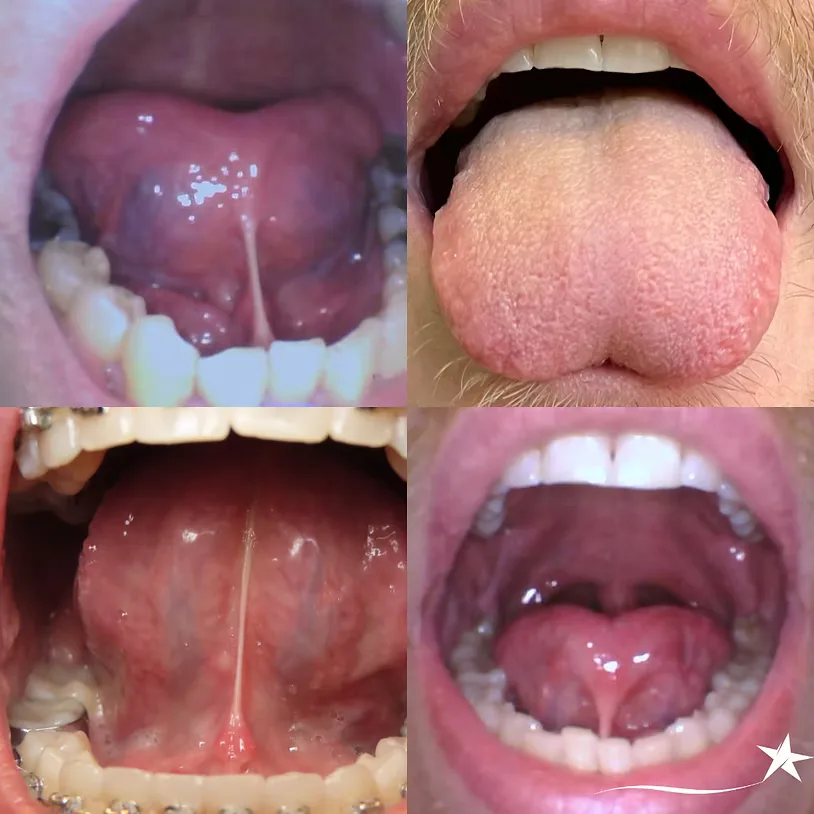
How Flexible Is Your Tongue? Measure Your Mobility to Check for a Tongue Tie
Dr. Julie Park, DMD
Oral & Maxillofacial Surgeon
You've probably heard of the toe touch test as a measure of flexibility, which helps prevent injuries as we age. But did you know your tongue also has a flexibility test? Your tongue's movement plays a crucial role in breathing, swallowing, and even facial development.
Restricted tongue mobility has been linked to open-mouth breathing, snoring, poor sleep, cardiovascular issues, and developmental delays. In this article, we'll explore tongue flexibility, why it matters, how to measure it, and what you can do to improve it.

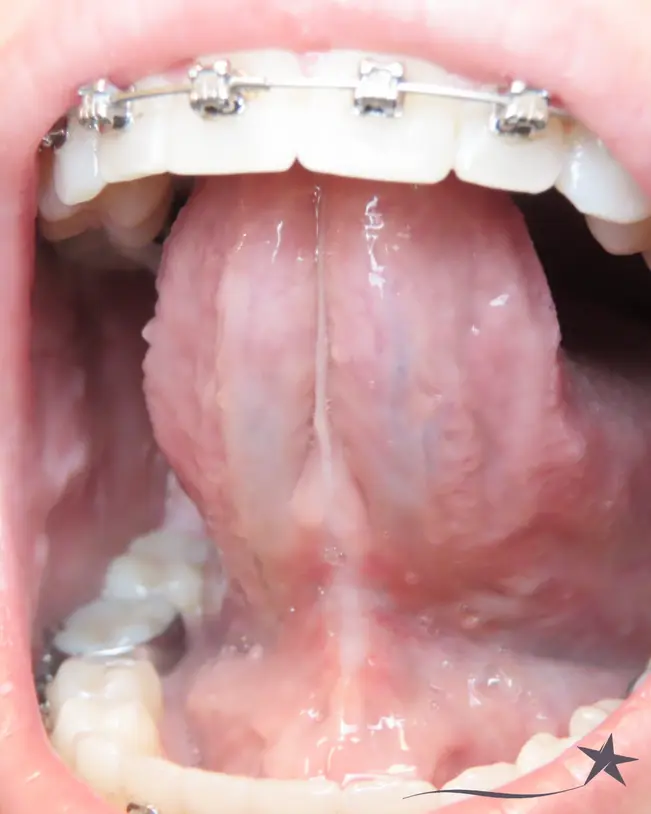
What is Tongue Flexibility?
Tongue flexibility refers to how freely and fully your tongue can move in all directions—forward, side to side, and up to the roof of your mouth. Of these movements, the ability to lift the tongue fully to the roof of the mouth (palatal suction) is the best indicator of optimal breathing, speech, and swallowing.
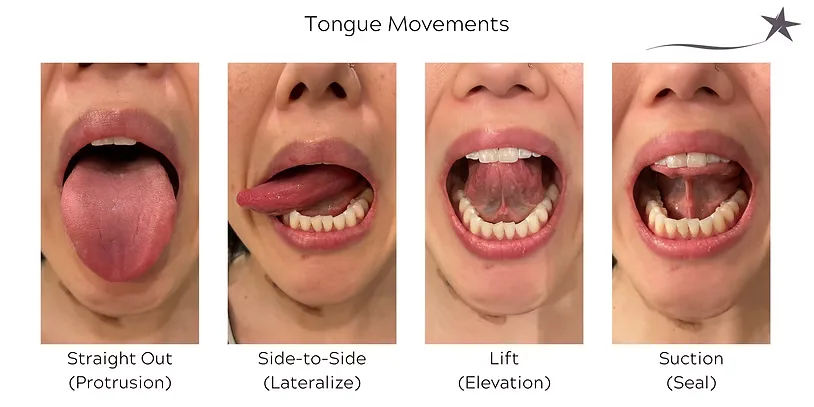
Why Does Tongue Flexibility Matter?
According to the functional matrix theory, consistent tongue pressure against the palate helps develop a well-formed, U-shaped maxilla. This, in turn, promotes clear nasal passages, balanced facial structure, and normal feeding and swallowing patterns.
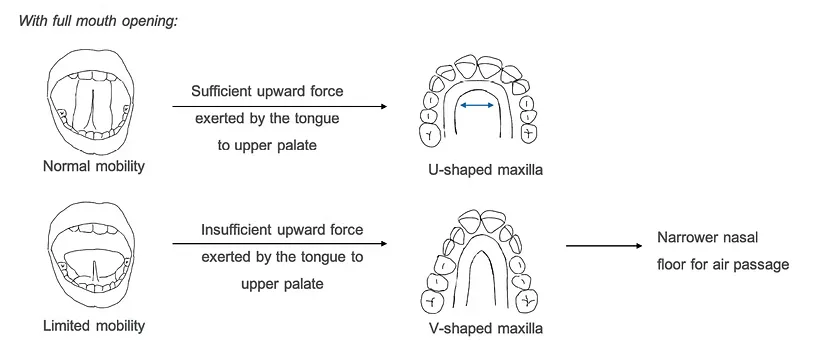
A flexible tongue, especially one that can press against the roof of your mouth, plays a key role in:
-
Healthy Facial Development – The tongue helps shape the upper jaw and palate, influencing overall facial growth.
-
Nasal Breathing – A properly positioned tongue supports clear nasal airways and reduces the tendency for open-mouth breathing.
-
Swallowing Efficiency – Proper tongue movement ensures effective swallowing patterns, preventing compensatory habits.
How to Measure Your Tongue Flexibility
Ready to check your tongue flexibility? Grab a ruler, stand in front of a mirror, and follow these steps:
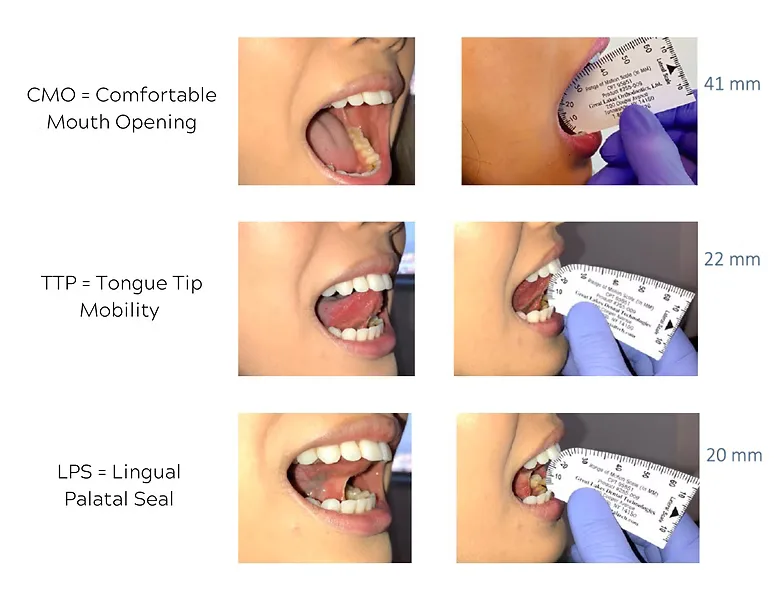
Step 1: Measure Your Comfortable Mouth Opening (CMO)
- Open your mouth as wide as you can comfortably.
- Use a ruler to measure the distance between your upper and lower teeth.
- Write this number down—this is your baseline for comparison (millimeters).
Step 2: Measure Your Tongue Tip Mobility (TIP)
- Place the tip of your tongue right behind your upper front teeth.
- Open your mouth as wide as possible while keeping your tongue in place.
- Measure the distance between your teeth (millimeters).
Step 3: Measure Back-of-Tongue Mobility (LPS – Lingual Palatal Seal)
- Suction the whole tongue up to the roof of your mouth.
- Open your mouth as wide as possible while keeping your tongue up.
- Measure the distance between your teeth (millimeters).
How to Interpret Your Results
A study of 1,052 subjects found the following normal ranges:
| Measurement | Normal Range |
|---|---|
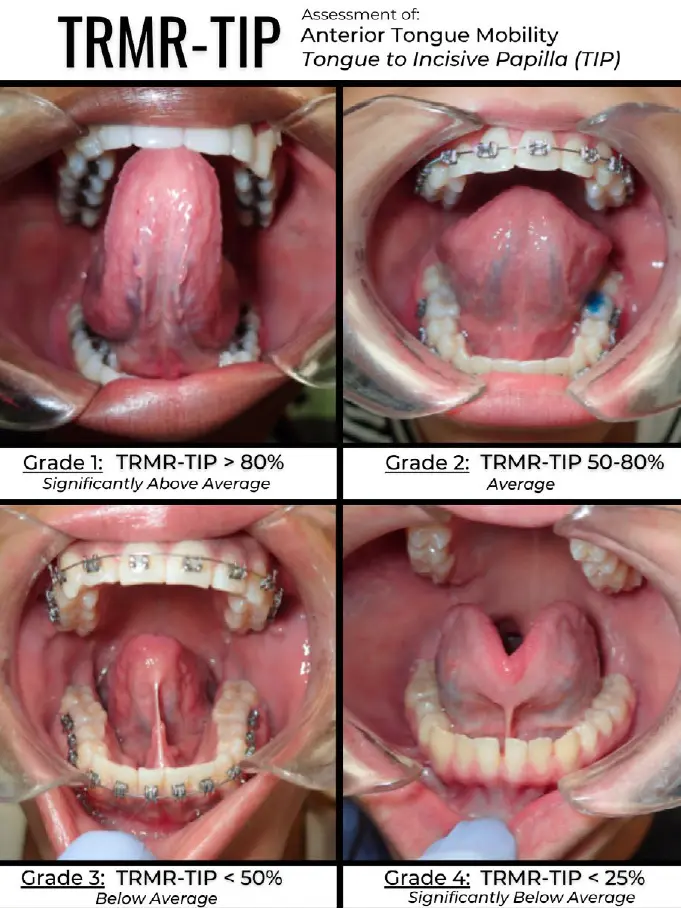
| Tongue Tip Mobility = TIP/CMO | >50% |
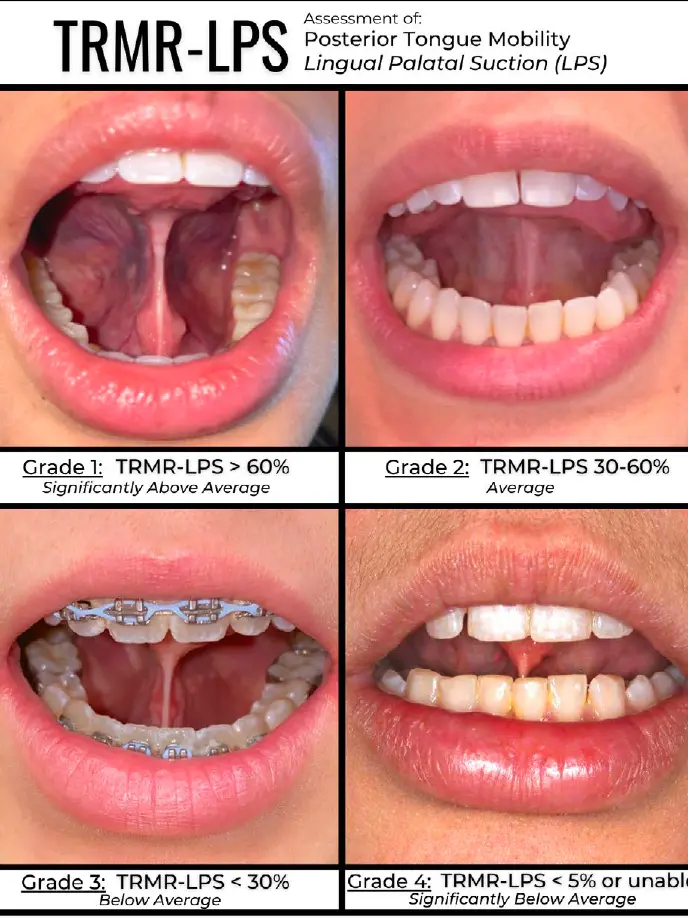
| Back-of-Tongue Mobility = LPS/CMO | >30% |
If your measurements are below these thresholds, you may have restricted tongue mobility due to a tongue tie.
What If Your Measurements Are Just Below Normal?
If your tongue flexibility measurements are slightly below normal and you experience any of the following, a professional evaluation can determine whether a tongue tie release would benefit you:
- Sleeping with your mouth open or catching yourself with your mouth open during the day.
- Choking or gagging on liquids or foods.
- Grinding your teeth at night.
- Experiencing reflux.
Your body may be compensating in ways that create subtle or worsening issues over time. Identifying restrictions early can prevent long-term problems.
What Are Common Compensations for a Tongue Tie?
If your measurements are borderline or below normal, your body may be adapting in ways you don't even realize. These compensations are often visible when taking TIP or LPS measurements:
Neck muscle tension
Straining the neck to assist tongue movement
Floor of mouth elevation
The floor visibly lifts when the tongue is raised
Jaw shifting forward
Lower jaw moves forward excessively
Eyebrow lifting
Arching eyebrows as a compensatory movement
Full-body tension
Legs and feet flexing during tongue movement
Overarching of the back
Engaging core muscles to assist tongue elevation
Recognizing these signs can help determine if a closer evaluation of your tongue function is needed. Small restrictions can lead to long-term compensations that impact breathing, posture, and overall well-being.
What Happens When Your Tongue is Too Tight?
A restricted tongue can lead to:
-
Structural Effects – High palate, narrow jaw, nasal obstruction.
-
Breathing & Sleep Effects – Mouth breathing, snoring, increased risk of sleep apnea.
-
Swallowing & Speech Issues – Tongue thrusting, swallowing difficulty, speech delays.
-
Dental & Jaw Issues – Teeth misalignment, crowding, TMJ pain, headaches.
When the tongue is restricted, the body often compensates by engaging neck muscles excessively, overarching the back, shifting the jaw, and causing full-body tension—all of which contribute to chronic pain and dysfunction.
How Do You Fix a Tongue Tie?
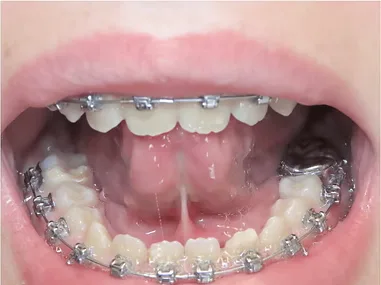
A frenectomy is a minor surgical procedure that releases a tongue tie, allowing for better tongue mobility. While commonly performed on infants with feeding difficulties, adults with ongoing symptoms can also greatly benefit from this procedure. A frenectomy is a straightforward procedure with lasting benefits.
An airway-focused provider can assess whether a release is needed. Many patients experience significant improvements when combining a frenectomy with myofunctional therapy to retrain tongue function.
Before
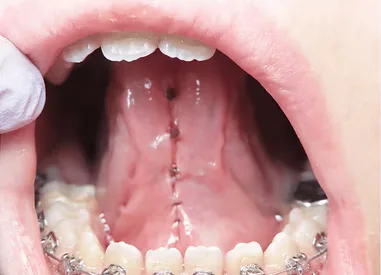
After
Ready to Take the Next Step?
Your tongue's flexibility impacts more than just speech—it affects your sleep, breathing, and overall wellness. If your measurements suggest restrictions, take the next step: Book a consultation and learn how improving tongue mobility can help you feel your best.
Call (614) 636-0338 or book your consultation online to assess your tongue function and explore treatment options for improved breathing, sleep, and overall wellness.
Book OnlineReferences
- Yoon, A., et al. (2017). Toward a functional definition of ankyloglossia. Sleep and Breathing, 21(1), 295–302.
- Zaghi, S., et al. (2021). Assessment of posterior tongue mobility using lingual-palatal suction. Journal of Oral Rehabilitation, 48(6), 692–700.
- Yuen, H. M., et al. (2022). Reduced tongue mobility: An unrecognized risk factor of childhood obstructive sleep apnea. SLEEPJ, 45(1), 1–9.
- Hiiemae, K. M., & Palmer, J. B. (2003). Tongue movements in feeding and speech. Critical Reviews in Oral Biology & Medicine, 14(6), 413–429.
Ready to take the next step?
Schedule a consultation with Dr. Park to discuss your concerns and explore your treatment options.
Related Articles